Worldwide Olympic Partner
By the mid-1990s, Samsung had become a household name in Korea. Internationally, its image was less renowned.
Lee Kun-hee recognized that even if Samsung products became known for high quality and performance, the company would fail to attain global competitiveness without also focusing on softer elements like design and branding.
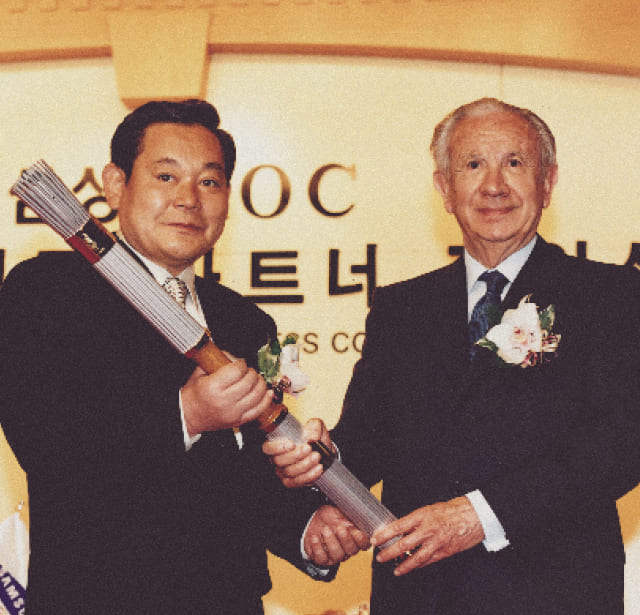
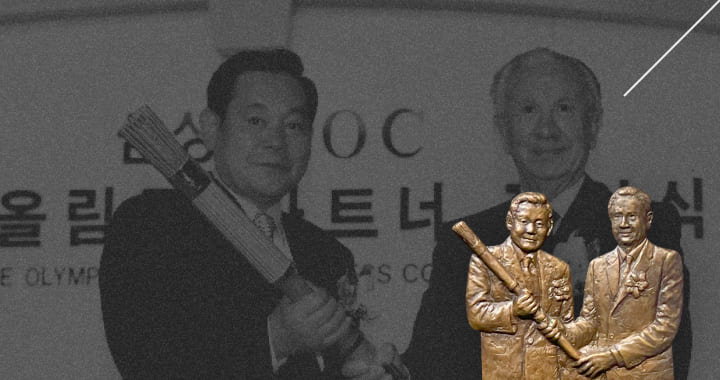
May 1997: Samsung-IOC Olympic Partner Signing Ceremony
We must strive for uncompromising excellence in philosophy, culture, corporate image, design, and service. Future marketing will involve selling not only our products but also a philosophy and culture. Only when you have a positive corporate image can you be respected and admired by the public.
January 1997He set his eyes on the Olympics as a vehicle to enhance Samsung’s brand image, predicting that by actively engaging with the Olympic Movement and sponsoring the global celebration of sport, Samsung could significantly elevate its own stature around the world.
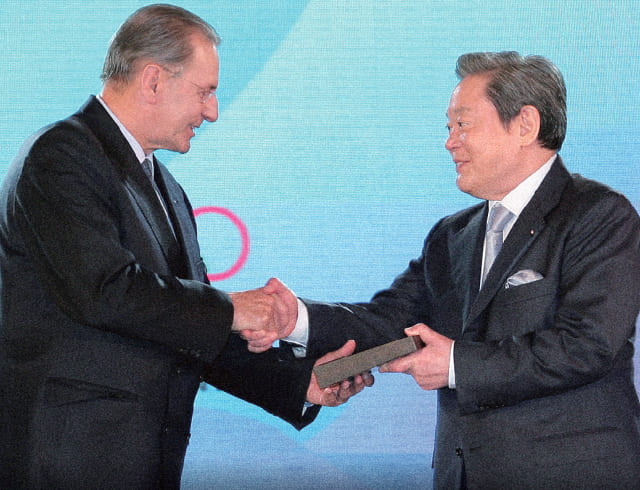
April 2007: IOC and Samsung extended their Olympic partnership (Beijing, China)

Chairman Lee was appointed as an IOC member in July 1996, and the company immediately entered into sponsorship negotiations with the IOC. The talks culminated in May of the following year, with Samsung becoming a Worldwide Olympic Partner, a status reserved for only the world’s most prestigious brands.
Samsung took its first steps as a Worldwide Olympic Partner at the 1998 Nagano Winter Olympics and then at the 2000 Sydney Summer Games, where it launched a series of impactful global marketing campaigns.
This enabled the company to begin its upward ascent in global brand rankings. When Interbrand issued its first brand value report in 2000, Samsung debuted in 43rd place. By 2006, it reached 20th, and in 2012 it was 9th. By 2020, Samsung had become a top-5 global brand.
Quality is Pride
Digital Management Declaration