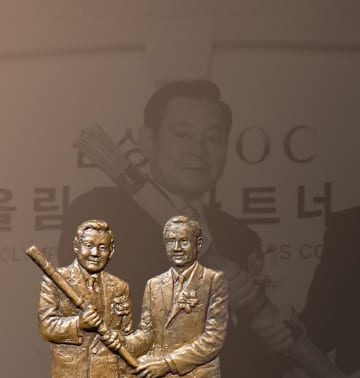

A photo and relief of employees destroying 150,000 defective products with hammers at Samsung Electronics' Gumi Plant in 1995. A photo and relief of employees destroying 150,000 defective products with hammers at Samsung Electronics' Gumi Plant in 1995.
04

Quality is Pride

Lee Kun-hee’s quality-first approach, a key tenet of his New Management Initiative, emphasized the creation of a virtuous cycle. His belief was that when quality improves, quantity will follow.

Quality-oriented management enhances product quality, reduces defects, improves efficiency, and increases production, which ultimately leads to a positive growth in quantity.

July 1993

The most vivid illustration of Chairman Lee’s determination to put quality first was his call for a symbolic bonfire of defective products. This event did more than just symbolize his commitment to eliminating defects in products; it also demonstrated that the mindset of selling defective products to consumers is unethical.
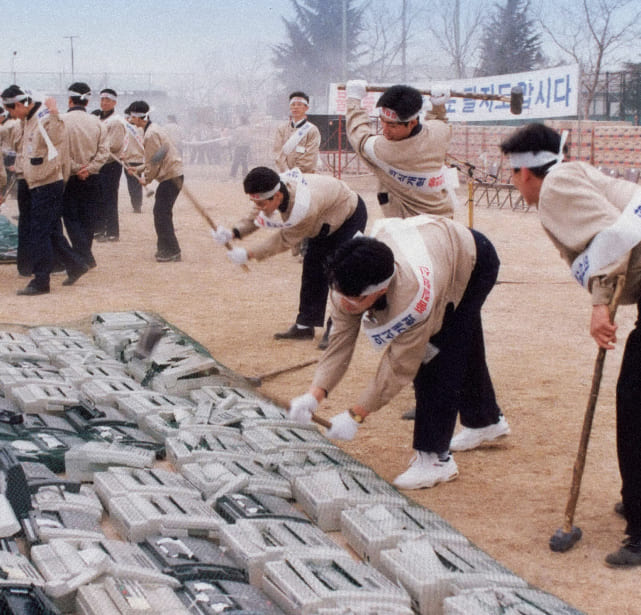
A photo of employees smashing 150,000 defective products with hammers at Samsung Electronics' Gumi Plant in 1995.

March 1995: Bonfire of defective cordless phones at Samsung’s Gumi Plant
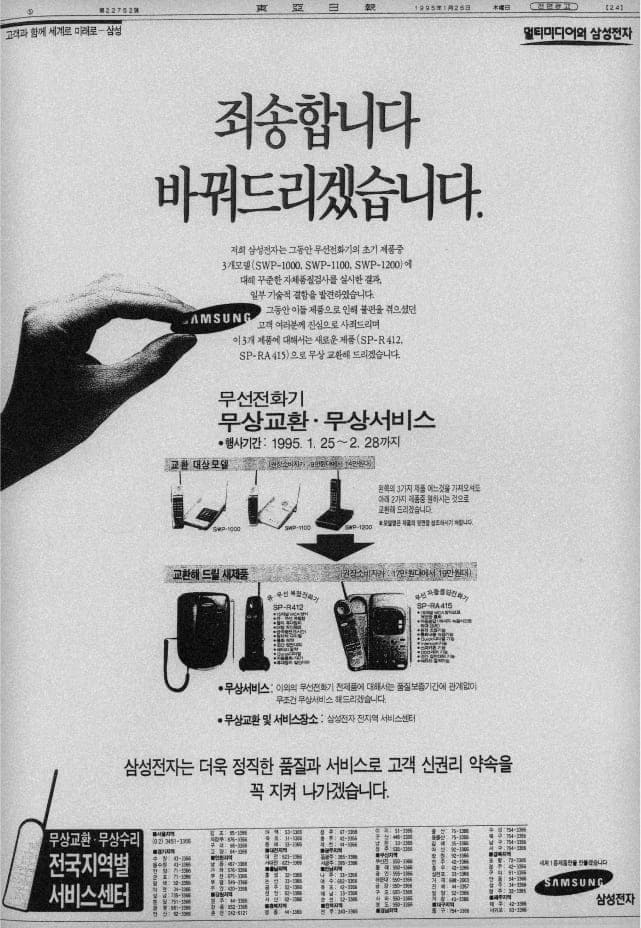
The story begins in 1995, just two years after the New Management Declaration, when Samsung Electronics discovered a major issue with its cordless phones. The company had rushed into production without proper quality control, leading to a defect rate that surged to 11.8%.

We need to replace even the cordless phones sold years ago. Let’s collect all the remaining inventory and returned units, and hold a bonfire to ensure we never produce such products again. What kind of mindset allows the production and sale of such inferior products, especially after the introduction of the New Management Declaration?

January 1995
A newspaper announcement for Samsung’s recall of defective cordless phones which reads 'Sorry, we will replace it for you.'

January 1995: Samsung’s apologetic newspaper ad for the recall of defective cordless phones

Seeing that the company’s mindset remained unchanged even after his New Management declaration, he was determined to make a correction, even if it meant shutting down the business. The recall was accompanied by a deep expression of regret for the inconvenience caused to customers.
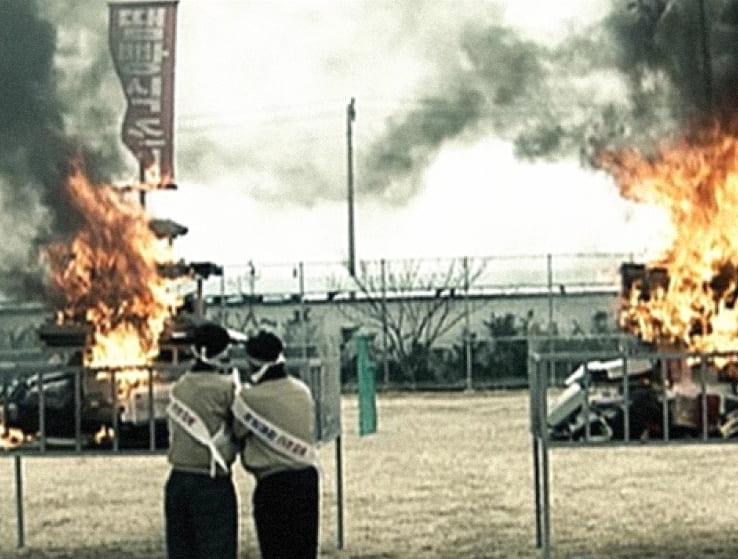
A photo of the symbolic burning of defective cordless phones at Samsung Electronics' Gumi Plant in 1995.

March 1995: Bonfire of defective cordless phones at the Gumi Plant

On March 9, 1995, 150,000 defective devices, including cordless phones, were burned at Samsung’s Gumi plant. It was a moment fraught with emotion for employees as they watched their hard work consumed by the flames. But the bonfire sent a clear message about quality, and instilled a basic principle that has guided Samsung ever since: defects will never be tolerated.