

A relief of Chairman Lee Kun-hee in a dust-proof suit with D-RAM chips, and a background photo of Chairman Lee Kun-hee in a dust-proof suit. A relief of Chairman Lee Kun-hee in a dust-proof suit with D-RAM chips, and a background photo of Chairman Lee Kun-hee in a dust-proof suit.
03

Quest for Semiconductor Prowess

Semiconductor technology has transformed the lives of people around the world. It’s also one of the fundamental pillars of the Korean economy and represents Samsung’s leadership in cutting-edge technology.
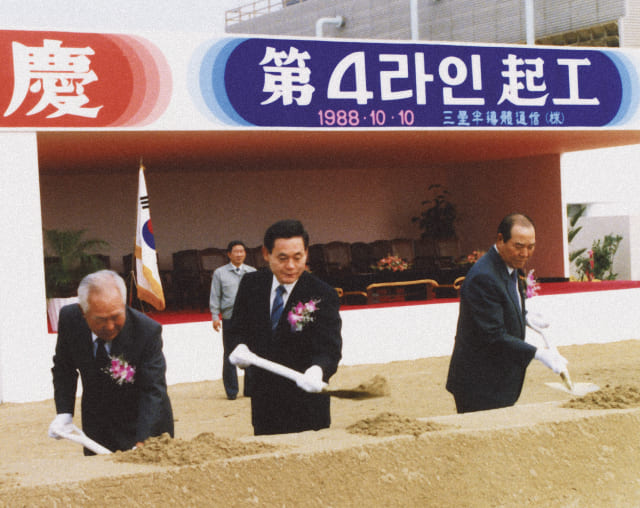
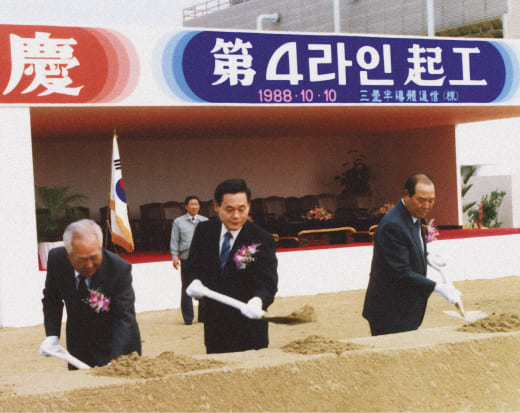
A photo of Chairman Lee Kun-hee and key executives attending the groundbreaking ceremony for Semiconductor Giheung Line 4 in 1988. A photo of Chairman Lee Kun-hee and key executives attending the groundbreaking ceremony for Semiconductor Giheung Line 4 in 1988.

October 1988: Giheung Line 4 Groundbreaking Ceremony
By 1992, Samsung’s D-RAM business was already achieving success. In August of that year, the company solidified its leadership by pioneering the world’s first 64MB DRAM. In 1993, Samsung claimed the No. 1 position in memory chips and continued to innovate, releasing a 256MB DRAM in August 1994.

Samsung’s success in this industry is a powerful testament to Chairman Lee Kun-hee’s tenacious commitment to technology and bold decision making. This is especially true when considering that Samsung achieved global eminence just a decade after its first investment in 1983, and that the company has maintained ongoing industry leadership since.

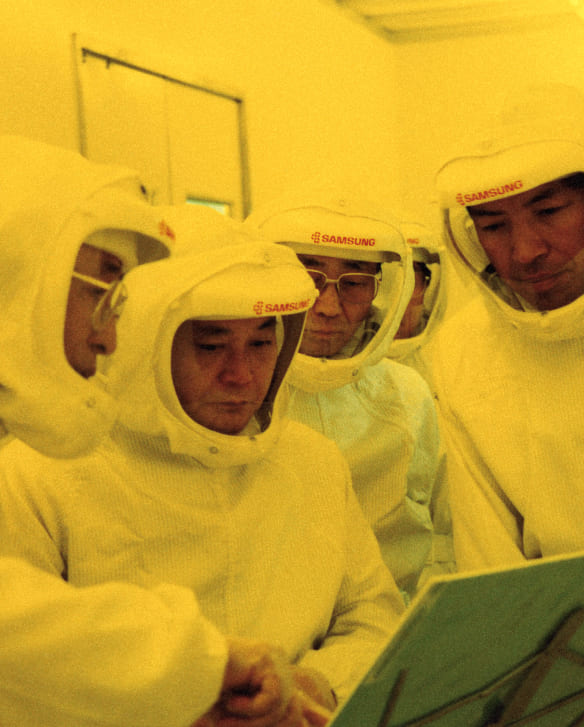
A photo of Chairman Lee Kun-hee inspecting a semiconductor production line in a dust-proof suit while listening to staff explanations.

April 1992: Lee Kun-hee’s visit to the Giheung plant

For semiconductors, timing is everything. The Chairman knew that these highly advanced chips would shape the future, and his foresight led to visionary decisions and bold investments that were made without hesitation.


The semiconductor industry is a high-tech, knowledge- and capital-intensive business that merges natural with social sciences. Timing is critical: a one-year delay in investment can lead to the loss of billions in potential profits, with a significant impact on the company's management.

May 1993

Two historic decisions in particular helped define the course of Korea’s semiconductor industry. In 1988, the company made the bold move to adopt vertical stacking over trench technology to mass produce 4MB DRAM. And in 1993, an even more daring decision was made to convert Line 5 to 8-inch wafer production.